

Tips for Buying Vintage Clothes Online: A 2026 Guide
Table of Contents
- Why Buying Vintage Clothes Online Requires a Different Strategy
- How to Measure Clothes for Online Shopping: The Essential Measurements
- Vintage Streetwear Authentication Guide: How to Spot Real vs. Fake
- Evaluating Fabric Quality and Garment Condition
- Essential Search Terms and Keywords for Vintage Platforms
- Understanding Vintage Sizing vs. Modern Sizing
- Identifying Eras and Decades to Verify Provenance
- Budgeting and Price Research: Spotting Fair Pricing
- Hygiene and Cleaning Protocols Before Wearing
- Dealing with Final Sale Policies and Return Protections
- Repair and Restoration Basics for Minor Damage
- Building a Cohesive Wardrobe: Mixing Vintage with Contemporary Streetwear
- Frequently Asked Questions
Last Updated: September 27, 2026
Why Buying Vintage Clothes Online Requires a Different Strategy
Buying vintage clothes online is fundamentally different from shopping in a brick-and-mortar thrift store. You can't touch the fabric, inspect the seams in person, or try things on before committing. You're making decisions based on photos, descriptions, and seller reputation, which means the stakes are higher and the margin for error is wider.
At AuthentiKickz, we've authenticated thousands of vintage and contemporary pieces across our full catalog, including streetwear, band tees, workwear, and everyday apparel. What we've learned is that successful online vintage shoppers follow a completely different playbook than casual thrift browsers. They measure obsessively. They verify authenticity before purchasing. They understand that sizing standards have shifted dramatically over decades. They know which platforms offer real buyer protection and which ones leave you exposed.

This guide walks you through the exact strategies that separate confident, successful vintage buyers from those who end up disappointed. We'll cover measurements, authentication, fabric evaluation, search tactics, and the practical logistics that most guides skip entirely, like hygiene protocols and dealing with final sale policies. By the end, you'll have a framework for evaluating every vintage piece you encounter online, whether you're hunting for a specific era, building a cohesive wardrobe, or just looking for affordable streetwear that actually fits.
How to Measure Clothes for Online Shopping: The Essential Measurements
The single biggest mistake vintage shoppers make is relying on size tags. A vintage medium from 1995 doesn't fit like a modern medium. A "Large" from one brand might be tighter than a "Large" from another. The only reliable way to know if something will fit is to compare actual measurements, pit-to-pit width, inseam length, shoulder width, and sleeve length.
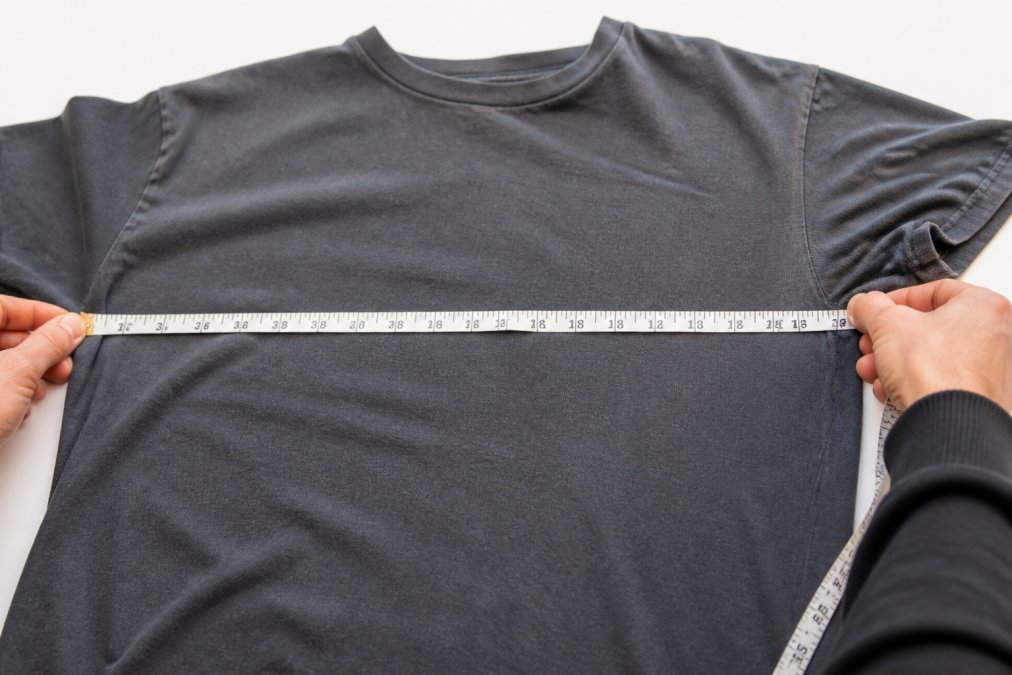
Pit-to-Pit and Inseam: The Two Measurements That Matter Most
Pit-to-pit is the horizontal distance across the front of a shirt from armpit to armpit, measured while the garment lies flat. This determines how wide the shirt will sit on your body. Inseam is the length of the pants leg from the crotch seam down to the hem, which tells you whether the length will work for your frame.
These two measurements are non-negotiable. When a seller lists a vintage shirt as "Large," that tells you almost nothing. But when they say "pit-to-pit 21 inches, shoulder 17.5 inches," you have real data. Compare those numbers to a shirt you already own that fits well, lay it flat, measure the same spots, and you'll know immediately if the vintage piece will work.
Inseam is equally critical for denim and pants. Vintage jeans often have a 28-inch or 30-inch inseam, which works for some body types and not others. Knowing your actual inseam, measured from your crotch to the top of your shoe, eliminates guessing. Many vintage pieces are hemmed or have been altered, so the original tag size is irrelevant; the actual inseam measurement is what matters.
Using a Sizing Chart to Compare Vintage Labels to Modern Fit
When you're shopping across platforms, bookmark sizing charts from sellers you trust. AuthentiKickz provides detailed measurements for every piece, pit-to-pit, shoulder width, sleeve length, and inseam, so you can compare directly to garments in your own closet. The more data points you have, the more confident your purchase will be.
Create a personal sizing reference document. Write down your actual measurements for a few favorite shirts and pants that fit perfectly. Then, whenever you're evaluating a vintage piece online, pull up that document and compare. Does this 1980s polo have a pit-to-pit of 22 inches? Compare it to your reference shirt. That's your answer.
Vintage Streetwear Authentication Guide: How to Spot Real vs. Fake
Counterfeit vintage streetwear exists, especially for high-value brands and limited drops from the last 10-15 years. Fakes are getting better, which means casual buyers are increasingly vulnerable. The good news is that authentication follows predictable patterns. You're looking for specific details that counterfeiters often miss or get wrong.
Check the Tag: Brand Label, Country of Origin, and RN Numbers
Start with the tag. Real vintage pieces have tags that match the era and brand. A 1990s Nike tag looks different from a 2010s Nike tag. The font, the layout, the care instructions, the country of origin, all of these change over time and are well-documented.
Look for the RN number. Most American garments have an RN (Registered Number) printed on the tag. If a tag claims to be from a certain era but the RN number wasn't registered until much later, that's a red flag.
Country of origin matters too. Vintage pieces made in the 1980s and 1990s were often manufactured in the United States or a handful of other countries. If a tag claims to be from that era but lists a country that didn't do textile manufacturing at that time, that's a red flag. AuthentiKickz verifies these details for every piece we authenticate, we check tags, RN numbers, and manufacturing dates as part of our standard authentication process.
Fabric Composition and Stitching Quality as Authentication Signals
Real vintage garments were often made with higher-quality materials than modern fast-fashion equivalents. Natural fibers, 100% cotton, wool, linen, were standard. Stitching is another tell. Vintage pieces typically have stronger, more consistent stitching than fakes. The thread quality, the stitch pattern, the seam construction, counterfeiters often cut corners here.
Feel the fabric. Does it have weight and texture, or does it feel thin and cheap? Run your fingers along the seams. Are they straight and even, or do they waver? Look at the hems. Are they finished cleanly, or are there loose threads and irregular stitching?
Examine the graphics on printed pieces. Vintage band tees and graphic prints should have slightly uneven ink application, that's normal for screen printing from that era. Modern counterfeits often have overly perfect, uniform printing, which is actually a sign that something's off. The ink should show some cracking or fading if the piece is genuinely old. If a shirt claims to be from 1995 but the graphic looks pristine and untouched, that's suspicious.
Evaluating Fabric Quality and Garment Condition
Vintage doesn't mean pristine. Many pieces have character, fading, softness from wear, maybe a small stain or minor hole. Understanding what's acceptable wear versus what's a dealbreaker is essential.
Sellers use grading systems to describe condition. Deadstock means unworn, with tags attached. Excellent means worn very little, with minimal signs of use. Good means worn and washed multiple times, with visible fading or softening, but no major damage. Fair means noticeable wear, maybe a small stain or small hole, but still wearable. Poor means significant damage, large stains, holes, or structural issues.
Before you buy, ask yourself: what condition am I comfortable with? If you're buying a vintage band tee to actually wear, Good or Excellent condition makes sense. If you're buying a rare piece for your collection, Deadstock might be worth the premium. If you're buying a beater shirt for casual wear, Fair condition is fine, you're paying less and you won't worry about adding to the patina.
Check the photos carefully. A reputable seller will show close-ups of any flaws. If you see a stain or hole in the photos, you know what you're getting. If photos are vague or low-quality, ask the seller for close-ups before buying. AuthentiKickz provides detailed condition reports and multiple photos for every piece, including close-ups of any wear, stains, or imperfections. We clean and inspect everything in-house, so you know exactly what condition each item is in.
Essential Search Terms and Keywords for Vintage Platforms
Knowing how to search effectively on vintage platforms dramatically improves your odds of finding what you want. Different platforms use different search logic, so understanding the keywords and operators that work on each one matters. The difference between a generic search and a targeted one can mean finding exactly what you need versus wading through hundreds of irrelevant listings.
Platform-Specific Search Strategies
eBay supports boolean operators and field-specific searches. Use quotation marks to search exact phrases: "vintage Carhartt jacket 1990s" returns listings with all those terms in sequence. Use the minus sign to exclude terms: vintage band tee -reproduction -reprint filters out modern reproductions. Search within specific categories by using the category filter alongside keywords. For sizing, search vintage Levi 501 inseam:32 if the platform's search recognizes measurement fields. eBay also lets you filter by condition (New, Like New, Good, Fair, Poor), which narrows results significantly.
Depop and Poshmark rely on hashtag-based discovery and keyword matching. Search #vintage1990s #nike to find pieces tagged with both terms. These platforms also let you filter by size, price range, and condition. Depop's search is more forgiving of typos, so searching vintge still returns results. On Poshmark, searching a brand name pulls up all listings for that brand; then use the size filter to narrow further. Both platforms reward specific searches over broad ones, vintage band tee Metallica returns more relevant results than vintage tee.
Vintage Greenwich Supports Diversity →
Grailed (streetwear-focused) uses a tagging system, letting you combine brand, category, and era tags in one search. Add a size and condition tag together, save the search, and turn on alerts so new grails reach you before other buyers see them.
Advanced Search Tactics Across All Platforms
Use saved searches on every platform you shop regularly. Most reseller platforms let you save a search query and receive alerts when new items match your criteria. If you're hunting for vintage Carhartt in size Large, save that search and let the platform notify you when new listings appear. This is passive sourcing, you're not actively searching every day; the platform brings opportunities to you.
Creating a Search Workflow
Start broad, then filter narrow. Search the brand name first, then apply filters for size, condition, price, and era. Most platforms show results sorted by "newest" or "ending soon" by default; change the sort to "price: low to high" if you're budget-conscious, or "price: high to low" if you're hunting rare pieces.
Understanding Vintage Sizing vs. Modern Sizing
Vintage sizing is not modern sizing. A vintage Medium is typically smaller than a modern Medium. A vintage Large from the 1980s might fit like a modern Small or Medium depending on the brand and the era.
Identifying Eras and Decades to Verify Provenance
Knowing how to identify an era is essential for authentication and for understanding the piece's cultural significance. Different decades have different tag designs, fabric standards, manufacturing locations, and graphic printing techniques.
Budgeting and Price Research: Spotting Fair Pricing
Vintage pricing varies wildly depending on rarity, condition, brand, and era. A common mistake is assuming that vintage is always cheap. Rare pieces, limited drops, and highly sought-after brands command premium prices, sometimes more than new retail.
Hygiene and Cleaning Protocols Before Wearing
Vintage pieces have been worn, stored, and handled by multiple people. Many new vintage shoppers worry about hygiene, a legitimate concern that most guides skip entirely. Understanding how to safely sanitize and clean vintage fabrics before wearing them is essential for confidence and health. The good news is that most vintage pieces respond well to standard cleaning methods, and a few precautions eliminate the vast majority of concerns.
Understanding Fabric-Specific Cleaning Requirements
Different fabrics require different approaches. Cotton and cotton blends (t-shirts, band tees, workwear) are the most forgiving. These can almost always be machine-washed in cold water on a gentle or normal cycle with mild detergent. Cold water is important, it prevents color bleeding and reduces shrinkage. Wash inside-out to protect graphics and prints. Dry on low heat or air-dry to preserve elasticity and prevent fading.
Pre-Wash Inspection and Stain Treatment
Before washing, inspect the piece for stains, damage, or areas of concern. Turn the garment inside-out and look at seams, underarms, and collar areas, these accumulate the most dirt and odor over time.
Sanitization Beyond Standard Washing
Standard washing removes most bacteria and odor-causing compounds. However, if you want additional peace of mind, a few techniques provide extra sanitization without damaging fabric.
Drying and Storage After Cleaning
How you dry and store a piece after cleaning matters as much as the washing itself. Air-drying is gentler than machine drying and extends garment life. Hang pieces on a clothesline or lay them flat on a clean towel to dry. If you must use a dryer, use the lowest heat setting and remove the piece while still slightly damp to prevent over-drying and shrinkage.
When to Seek Professional Help
If a piece has heavy staining, persistent odors, or delicate construction, professional cleaning is worth the investment. Professional cleaners have access to specialized solvents, equipment, and expertise that home washing can't match. For vintage pieces you paid a premium for, or pieces with sentimental value, professional cleaning ensures the piece is handled correctly and sanitized thoroughly.
Dealing with Final Sale Policies and Return Protections
Not all vintage sellers offer returns. Many operate on a final sale basis, which means once you buy, you own it, no returns, no refunds, no exceptions. This is riskier than buying from retailers with generous return policies.
Repair and Restoration Basics for Minor Damage
Minor damage, small holes, loose seams, missing buttons, doesn't have to be a dealbreaker. Many vintage pieces are worth repairing, especially if the piece is rare or the damage is minimal.
Building a Cohesive Wardrobe: Mixing Vintage with Contemporary Streetwear
The real power of vintage shopping is building a cohesive wardrobe that mixes eras and styles. A 1990s band tee pairs perfectly with modern jeans. Vintage Carhartt workwear layers under contemporary streetwear hoodies. Vintage denim grounds modern silhouettes.
Frequently Asked Questions
How do I know if vintage clothes are actually authentic when buying online?
Check the tag first: look for the brand name, country of origin, and RN number (a regulatory identification used by the FTC). Compare the tag design to era-specific examples online, fonts, logos, and label construction changed over decades. Examine fabric composition and stitching quality; authentic vintage pieces use natural fibers like cotton or wool with consistent, tight stitching. Request detailed photos of seams, hems, and any graphics. Reputable resellers like AuthentiKickz authenticate every piece in-house and provide honest condition reports, so you know exactly what you're getting.
What's the biggest mistake people make when buying vintage clothes for online shopping?
Not measuring correctly against a sizing chart is the most common error. Vintage sizing runs smaller than modern sizing, and each brand's fit varies. Instead of assuming your usual size, measure a garment you already own (pit-to-pit, inseam, sleeve length) and compare those numbers to the seller's measurements. Read the condition report carefully too, 'good condition' to one reseller might mean visible wear, while another describes minor flaws in detail. Always ask questions about stains, holes, or fading before committing to a purchase.
How should I clean vintage clothes when they arrive?
Start with a gentle inspection. Most vintage pieces benefit from a cold-water wash on a delicate cycle with mild detergent designed for natural fibers. Check the care tag if it's still legible, though many vintage items predate modern care instructions. For delicate fabrics like silk or wool, hand-wash in cool water. Avoid bleach and hot water, which can damage both color and fiber integrity. Air-dry flat or on a hanger, never use a dryer on vintage textiles. For graphic tees or pieces with screen-printed designs, turn them inside out before washing to protect the print.
What should I look for in a condition report when buying vintage online?
A detailed condition report lists specific flaws: stains, small holes, fading, discoloration, or pilling. Honest resellers describe the location and severity of wear. Compare the photos to the description, if the listing says 'excellent condition' but the photo shows visible stains or creasing, ask for clarification. Look for mentions of patina (natural aging that adds character) versus damage (tears or permanent marks). AuthentiKickz grades every item and provides accurate photography and honest descriptions, so you see exactly what you're buying. Avoid listings with vague language like 'some wear' without specifics.
How do I build a complete outfit using both vintage and contemporary streetwear?
Start with a neutral base: vintage Carhartt work jackets, classic Dickies, or vintage denim pair well with modern hoodies and tees. Mix eras intentionally, pair a 90s graphic tee with new-season joggers, or layer a vintage band shirt under a contemporary streetwear piece. Consider the color palette and vibe: vintage pieces with cultural significance (band tees, licensed graphics) work as statement layers, while contemporary basics provide consistency. AuthentiKickz stocks everyday streetwear alongside vintage collectibles, so you can source an entire fit from one authenticated reseller without mixing quality standards or worrying about authenticity across multiple platforms.
What does 'deadstock' mean when shopping for vintage clothes?
Deadstock refers to unworn, unused vintage clothing that was never sold when originally produced, often items that sat in warehouses for years before being discovered by resellers. These pieces carry original tags, no fading, and zero wear. Deadstock commands higher prices because condition is flawless and provenance is clear. When shopping, deadstock listings should explicitly state 'new with tags' or 'never worn.' This differs from 'like new' vintage, which may have been worn once or twice. Deadstock is ideal if you want pristine condition, but gently worn vintage often offers better value and character.
How do I verify the era of a vintage piece to ensure I'm not overpaying?
Check the tag for manufacturing clues: country of origin, tag design, and care label format all changed over decades. Clothing made in the US typically predates the 1990s, while 'Made in Pakistan' or 'Made in China' tags suggest 1990s-2000s production. Look up the brand's history, when did they start, when did they rebrand? Search for the RN number (if present) in the FTC database; it's tied to a specific company and time period. Graphic quality, fabric weight, and stitching style also signal era. If you're unsure, ask the reseller directly. Reputable sellers know their inventory's provenance and can explain why a piece is priced at a certain level.
What are advanced search operators I can use on vintage marketplaces to find exactly what I want?
Use quotation marks to search exact phrases: 'vintage Carhartt' finds those two words together, not separately. Add brand names with size filters to narrow results: 'Southpole 36' returns that specific brand and size. Use minus signs to exclude terms: 'vintage tee -stain -hole' filters out damaged items. Search by era: '90s' or '1990s' in the title. On platforms like Grailed or Depop, use condition filters (deadstock, excellent, good, fair) to match your budget and tolerance for wear. Combine keywords with your budget range to find fair pricing quickly.