

How to Spot Fake Vintage Clothes: A Complete Guide
Table of Contents
- Why Fake Vintage Clothes Matter More Than You Think
- Examining Garment Tags and Labels
- How to Tell if a Shirt is Single Stitch vs. Double Stitch
- Analyzing Screen Print Texture and Quality
- Identifying Reproduction Vintage Tees and Graphics
- Checking for Signs of Wear and Aging
- Verifying Logo Accuracy and Font Weight
- Evaluating Fabric Composition and Material Feel
- Digital Authentication Tools and Chemical Testing
- Common Mistakes to Avoid When Authenticating Vintage
- Frequently Asked Questions
Last Updated: September 21, 2026
Why Fake Vintage Clothes Matter More Than You Think
Counterfeit vintage clothing has become a serious problem in resale markets. Buyers spend good money expecting authentic pieces from specific decades, only to discover they've purchased modern reproductions or outright fakes. The stakes matter because vintage authenticity isn't just about bragging rights, it's about value, craftsmanship, and the cultural significance of owning a genuine piece of fashion history.

At AuthentiKickz, we authenticate every piece in our catalog, from band tees to workwear to premium sneakers. We've seen how easy it is for buyers to get fooled, and we've learned exactly what separates real vintage from clever fakes. This guide walks you through the technical details and practical techniques to spot fake vintage clothes before you buy.
The problem has evolved. It's no longer just about obvious knockoffs, today's reproductions are sophisticated. Manufacturers use aged fabric, distressed prints, and tag replicas that fool casual observers. But there are always tells. Specific manufacturing techniques, material compositions, tag formatting, and construction methods changed dramatically across decades. When you know what to look for, spotting fake vintage clothes becomes straightforward.
Examining Garment Tags and Labels
Your first line of defense when learning how to spot fake vintage clothes is the tag itself. Vintage clothing tags contain specific information that changed over time, and counterfeiters often miss these details or get them wrong.
Tags from different eras have distinct formatting, fonts, and content requirements. A 1970s tag looks completely different from a 1990s tag. The way companies listed fiber content, printed RN numbers, and included care instructions evolved as regulations changed. Reproductions often use a generic "vintage-looking" tag that doesn't match any specific year or manufacturer standard.
Copyright Dates and Manufacturing Details
Look for copyright dates on tags, these are your smoking gun. Legitimate vintage pieces include specific copyright years that correspond to when the garment was actually made. A shirt claiming to be from 1985 should have tags reflecting 1980s manufacturing standards, not 2010s formatting.

Check for RN numbers (Registered Number issued by the Federal Trade Commission) (the FTC). These identify manufacturers and changed format over decades. A fake vintage shirt might have an RN number that didn't exist during the claimed production year. Real vintage tags also often include "Made in USA" with specific state abbreviations or country codes that correspond to actual production locations from that era.
The fabric content listing is another critical detail. In the 1970s and 1980s, companies listed fiber content in English and multiple languages on export-market pieces. By the 1990s, labeling standards had shifted. Superfakes often use modern percentage formatting or omit language variations that were standard decades ago.
Regional Tag Variations Across Decades
Different regions had different tag requirements and manufacturing practices. A vintage Champion sweatshirt made in the USA has a completely different tag structure than one made in Canada or Mexico. The font, the way percentages were listed, the placement of RN numbers, all of these varied by region and decade.
Early 1990s Champion pieces often feature multilingual fiber content listings because they were made for international export. By the late 1990s, manufacturers simplified tags for domestic markets. If you're evaluating a Champion piece claiming to be from 1990 but the tag shows simplified, single-language formatting, you've found a red flag.
Store tags tell a story too. Vintage pieces sometimes include original retail tags from department stores like Sears, Montgomery Ward, or regional chains. These tags have specific printing styles and information architecture that changed over time. Counterfeiters rarely replicate these secondary tags accurately because they require knowledge of how different retailers formatted their labels across decades.
How to Tell if a Shirt is Single Stitch vs. Double Stitch
Construction method is one of the most reliable ways to spot fake vintage clothes. Single-stitch construction was the standard for most vintage t-shirts through the 1980s and early 1990s. Double-stitch and serger stitching became dominant later. Understanding the difference between these methods is essential for authentication.
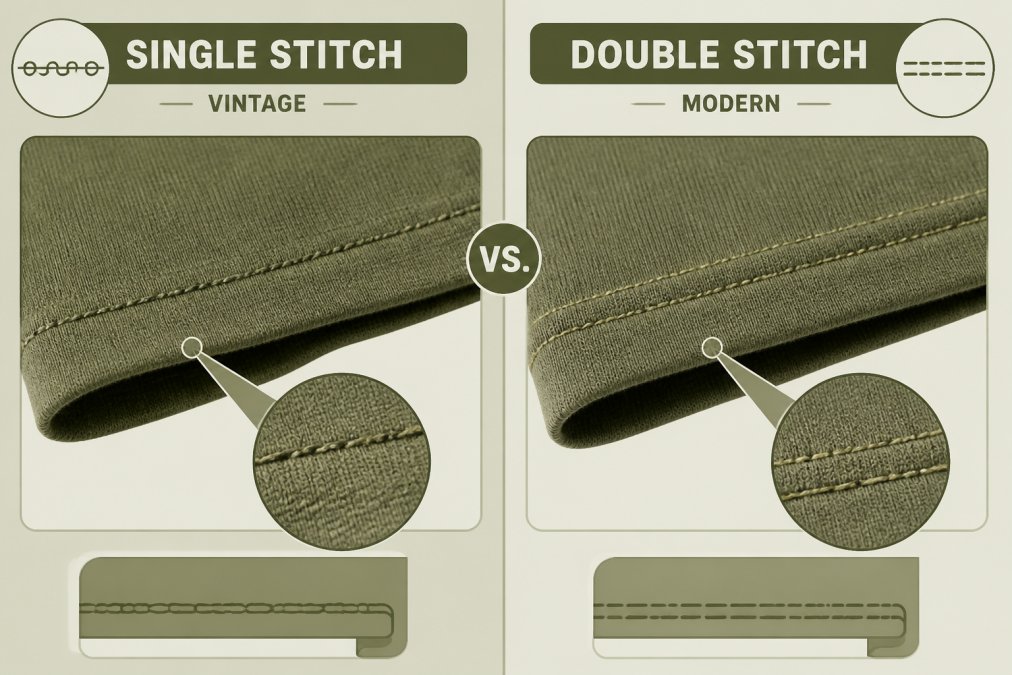
Single-stitch construction uses one continuous thread line to bind fabric pieces together. Run your finger along the inside seam of a genuine vintage piece, you'll feel a single, relatively flat seam. The thread creates one visible line on both sides of the garment. This method was economical and created a softer, more flexible garment that aged beautifully.
Double-stitch construction uses two parallel thread lines, creating a stronger but stiffer seam. Most modern t-shirts use this method. The seam feels thicker and more rigid. When you examine a double-stitched garment inside and out, you see two distinct parallel lines of stitching.
What Single-Stitch Construction Reveals
Genuine single-stitch vintage pieces have specific characteristics that reproductions struggle to replicate convincingly. The seams are thinner and more flexible. Over decades, single-stitch seams develop a subtle texture and slight fraying at the edges, signs of authentic aging rather than intentional distressing.
The thread itself tells a story. Original single-stitch pieces used specific thread types available during their production era. Modern reproductions often use contemporary thread that looks too uniform and clean. Real vintage single-stitch seams show slight color variation, minor irregularities in tension, and natural wear patterns that are nearly impossible to fake convincingly.
Check the side seams and sleeve attachments carefully. On authentic vintage pieces, you'll see the single thread line running continuously without doubling back. Reproductions sometimes fake this by using a single-stitch appearance while actually employing modern serger equipment, which creates a subtly different texture and appearance.

Recognizing Modern Serger Stitching in Reproductions
Serger machines create a specific type of stitch that's distinctly different from both single-stitch and traditional double-stitch methods. Sergers wrap thread around the fabric edge, creating a finished seam that looks clean and uniform. This technology became standard in the 1990s and 2000s.
If you're examining a shirt claiming to be from the 1970s and you find serger stitching, you've identified a reproduction. Serger seams have a characteristic appearance, the thread wraps around the edge of the fabric in a way that single-stitch simply doesn't. The seam is also typically wider and has a distinctive texture.
Modern reproductions sometimes use serger stitching because it's the fastest, most economical method for manufacturers today. They assume buyers won't know the difference. But serger stitching is a dead giveaway for pieces claiming to be vintage from eras before serger machines were widely adopted in garment manufacturing.
Analyzing Screen Print Texture and Quality
Screen print quality and texture changed significantly over decades. Understanding how ink saturation, ink type, and printing techniques evolved helps you spot fake vintage clothes with printed graphics.
Vintage screen prints from the 1980s and early 1990s have specific characteristics. The ink sits on top of the fabric with a slightly raised, tactile feel. Run your finger across a genuine vintage graphic, you'll feel the ink has dimension. Modern reproductions often use screen printing techniques that create flatter, more uniform coverage.
The ink itself tells a story. Older screen prints used different ink formulations than contemporary inks. Over time, genuine vintage prints develop subtle cracking patterns, color fading, and a slightly weathered appearance. The cracking follows natural wear patterns, typically around areas of movement and stress.
Check the ink saturation carefully. Vintage prints sometimes show slight color variation within the graphic, uneven coverage at edges, and minor imperfections that reflect the printing technology of that era. Modern reproductions aim for perfection, which is actually a red flag. Real vintage screen prints show minor inconsistencies that prove they were made with equipment and techniques from decades past.
Optical brighteners in modern inks create a slightly different visual quality than older formulations. Hold a vintage piece under different lighting, genuine older prints have a subtly different appearance than modern reproductions under UV light. The color tone and saturation reflect the specific ink chemistry available during the original production.
Identifying Reproduction Vintage Tees and Graphics
The "superfake" phenomenon has created reproductions so convincing that even experienced buyers get fooled. These aren't cheap knockoffs, they're intentional recreations of vintage designs using modern manufacturing techniques, then artificially aged to appear authentic.
Superfakes often nail the visual appearance but fail on technical details. A reproduction might use the correct graphic design, correct tag format, and even intentional distressing. But when you examine the construction, fabric aging, and material composition, inconsistencies emerge.
Spotting Superfakes and Modern Reprints
Superfakes typically start with a genuine vintage piece as reference. Manufacturers photograph authentic examples, recreate the graphic design, replicate the tag, and then manufacture new pieces using modern equipment. They might even use fabric from the correct era or source vintage blanks.
The key difference: superfakes age artificially. Authentic vintage fabric develops a specific patina over decades. The fiber structure changes slightly, colors shift in predictable ways, and the overall hand-feel reflects genuine aging. Artificial distressing, even when done expertly, has a different character. It looks intentional rather than organic.
Examine how the graphic has aged. Real vintage prints crack in patterns that follow natural stress points, neck area, armpits, anywhere the wearer moved repeatedly. Superfakes often show distressing that looks too uniform or aesthetically pleasing. Genuine aging is random and follows physics, not design principles.
The fabric itself reveals truth. Authentic 1980s single-stitch blanks have a specific weight, texture, and hand-feel. Modern reproductions might use vintage-sourced blanks, but the overall construction and fabric composition can still betray them. Check for inconsistencies between the tag era and the actual fabric characteristics.
Vintage Nike SB Dunk Mid "Fender Bass" →
Checking for Signs of Wear and Aging
Authentic vintage clothing shows wear patterns that tell the story of how it was actually worn. These patterns are nearly impossible to fake convincingly because they follow human movement and usage, not design logic.
Examine the collar area carefully. Genuine vintage t-shirts develop softening and slight fading around the neckline from repeated wearing and washing. The ribbing loses its structure gradually. Reproductions often have collars that look too uniform or show distressing that's too symmetrical.
Check cuff integrity on sleeves. Real vintage pieces develop specific wear patterns, slight fraying at the edges, color fading on the underside of the cuff from repeated folding, and subtle compression of the ribbing. These changes happen naturally over years of wear.
The overall fabric surface shows authentic aging. Genuine vintage pieces develop a subtle nap or texture from repeated washing and wearing. The color fades unevenly, areas that received more friction or sun exposure show more fading. Modern reproductions struggle to replicate this because authentic fading follows specific physics and wear patterns.
Seams show aging too. Real vintage seams develop slight fraying, color variation, and sometimes minor separation from repeated stress. The thread itself might show color changes or slight brittleness. Artificial distressing on seams typically looks too intentional or uniform.
Verifying Logo Accuracy and Font Weight
Logo placement, sizing, and font characteristics changed over time. Counterfeiters often get logo details wrong because they require specific knowledge about how companies formatted their branding across decades.
Examine font weight carefully. Vintage logos sometimes used specific typefaces that are no longer in common use. The stroke weight, how thick or thin the letterforms are, reflects the printing technology and design standards of that era. Modern reproductions sometimes use updated versions of logos that have slightly different proportions or stroke weight.
Check logo placement against the garment. On authentic pieces, logos are positioned with specific measurements from the neckline or edge. Reproductions sometimes place logos slightly differently because manufacturers use different pattern templates. A logo that's half an inch too high or too low suggests reproduction.
The spacing between letters in text-based logos is another detail. Vintage designs sometimes had kerning (letter spacing) that reflects the design tools available at the time. Modern reproductions might use contemporary design software that spaces letters slightly differently.
Embroidery details matter for pieces with embroidered logos. Vintage embroidery has specific stitch types and thread characteristics. Modern embroidery machines create different stitch patterns and thread tension. Examine the back of embroidered logos, authentic vintage pieces show thread techniques that reflect older equipment.
Evaluating Fabric Composition and Material Feel
The fabric itself is your most honest source of information. Material composition, weight, and hand-feel reflect the manufacturing standards and available materials of specific eras.
Run the fabric between your fingers. Authentic vintage cotton has a specific texture that develops over decades. The fibers soften slightly, and the overall hand-feel is distinctly different from new fabric. Genuine 1980s single-stitch blanks have a particular weight and texture that modern reproductions struggle to match, even when using vintage-sourced fabric.
Check for synthetic content. Some vintage pieces included polyester blends or other synthetics. The specific percentages and fiber combinations reflected what was available and economical during production. A tag claiming 100% cotton on a piece that clearly has synthetic content suggests reproduction or mislabeling.
Fabric weight matters significantly. Vintage pieces used heavier fabric than many contemporary garments. A genuine 1980s t-shirt blank typically weighs more than a modern equivalent. You can feel this difference immediately when you hold the piece.
Look for material composition consistency. Authentic vintage pieces sometimes show slight variations in fabric density or color from natural fiber variation and the dyeing processes of that era. Modern fabric production is more uniform and consistent. Extreme uniformity can suggest modern manufacture.
Digital Authentication Tools and Chemical Testing
Beyond visual inspection, several technical methods can verify authenticity. While not always accessible to casual buyers, understanding these tools helps you evaluate pieces when professional authentication is available.
UV light testing reveals optical brighteners in modern fabrics and inks. Authentic vintage pieces typically show minimal fluorescence under UV light because older manufacturing didn't use optical brighteners as extensively. Modern fabrics and inks glow noticeably under UV light. This test isn't foolproof, some vintage pieces do contain optical brighteners, but significant fluorescence suggests modern production.
Digital authentication databases exist for certain brands and eras. Some manufacturers maintain historical records of style codes, production dates, and manufacturing locations. Checking a piece's style code against these databases can confirm whether it's authentic or identify production inconsistencies. While not always accessible to casual buyers, understanding these tools helps you evaluate pieces when professional authentication is available.
Thread analysis can reveal manufacturing era. Different thread types, dyes, and construction methods were used across decades. Examining thread under magnification shows characteristics that reflect its production era. This requires expertise and isn't practical for most buyers, but professional authenticators sometimes use this method.
Fabric testing for synthetic content can be performed chemically. Authentic vintage pieces with specific fiber content claims can be tested to verify composition. If a tag claims 100% cotton but testing reveals polyester content, you've identified a reproduction or misrepresentation.
Common Mistakes to Avoid When Authenticating Vintage
Even experienced buyers make mistakes when learning how to spot fake vintage clothes. Understanding common pitfalls helps you avoid costly errors.
Don't assume all distressing is authentic aging. Artificial distressing has become sophisticated, but it typically looks intentional rather than organic. Real wear follows physics and human movement patterns. Distressing that's too symmetrical or aesthetically pleasing usually indicates reproduction.
Don't rely solely on tag appearance. While tags are important, reproductions now replicate them convincingly. Always verify tags against multiple other factors, construction method, fabric composition, wear patterns, and logo details. A perfect tag paired with inconsistent construction suggests reproduction.
Don't ignore construction details in favor of visual appeal. A piece might look perfect, but if the construction method doesn't match the claimed era, it's likely reproduction. Single-stitch versus double-stitch, seam finishing, and thread characteristics are objective facts that don't lie.
Don't assume newer is always worse. Some contemporary pieces are genuinely high-quality. The goal isn't to authenticate based on age alone, it's to verify that a piece is actually what it claims to be. A piece claiming to be 1980s vintage should show construction and material characteristics from that era.
Don't skip the hand-feel test. Fabric composition, weight, and texture reveal truth that photos can't capture. If you're buying online, request detailed photos of seams, tags, and fabric texture. Ask sellers about wear patterns and material feel. Legitimate sellers can describe these details accurately.
Finding authentic vintage pieces requires attention to detail and understanding how manufacturing changed across decades. When you examine tags, construction methods, screen print quality, fabric composition, and wear patterns together, the truth emerges. Reproductions might fool one or two categories, but they rarely fool them all.
At AuthentiKickz, every vintage piece in our catalog is authenticated in-house by our team. We examine tags, construction, fabric, graphics, and aging patterns before any piece is listed. Our grading system reflects actual condition honestly, so you know exactly what you're getting. Shop our vintage collection with confidence, every item has been verified for authenticity and cleaned meticulously before shipping.
Frequently Asked Questions
What are the most common signs of fake vintage clothing?
The quickest tells are modern tags, perfect stitching with no age wear, and overly vibrant colors or graphics. Reproductions often have double-stitched seams when originals used single-stitch, synthetic-looking fabric that hasn't faded naturally, and logos with incorrect spacing or font weight. Check for optical brighteners in the fabric, older pieces typically show yellowing or fading, not crisp whiteness after decades. Real vintage also shows authentic fraying, seam separation, or slight discoloration that matches the garment's age.
How do clothing tags help identify authentic vintage items?
Tags reveal manufacturing era, country of origin, and construction standards. A genuine vintage tag from the 1980s or earlier will show specific label formats, copyright dates, and regional variations, for example, Made in USA labels changed format multiple times, and multilingual tags indicate export-era production. Reproductions use modern tag printing techniques, cleaner fonts, and incorrect RN numbers. Look for faded or worn tag edges, original stitching through the tag, and label materials consistent with the stated decade. A deadstock vintage Champion Reverse Weave from the 1990s, for instance, displays the copyright date, Made in USA designation, and multilingual fabric content specific to that era.
How can I tell if a vintage graphic tee is a modern reproduction?
Examine ink saturation, cracking patterns, and graphic placement. Authentic vintage screen prints show natural cracking from years of wear and washing, fine lines that follow the fabric's texture. Modern reproductions often have rubbery, raised ink that feels plastic and cracks in uniform patterns. Check the graphic placement: genuine vintage tees have slightly imperfect alignment, while reproductions are perfectly centered. The ink color should show age-appropriate fading; if a 30-year-old shirt looks pristine and vibrant, it's likely a reprint. Compare the logo spacing and font weight against original examples from the era.
What's the difference between deadstock and authentic vintage wear?
Deadstock means never-worn, original condition with tags attached, it's authentic vintage that was stored for years without use. Authentic vintage wear shows natural aging: fabric yellowing, seam integrity issues from years of washing, fading from sunlight and detergent exposure, and thread discoloration. Deadstock pieces command higher prices because they preserve the original garment construction and materials. Both are genuine vintage; the difference is condition history. A genuine deadstock Champion Reverse Weave from the 1990s retains its original hang tags and shows zero wear, while an authentic worn vintage piece displays the natural distressing and fading that proves its age.