

How to Build Vintage Streetwear Outfits: 2026 Guide
Table of Contents
- Start With a Statement Piece
- How to Layer Streetwear Without Looking Bulky
- Master Proportions and Silhouette Balance
- Pick Graphic Tees That Do the Work
- Choose Footwear That Anchors the Fit
- Mix Textures and Fabrics for Depth
- Build a Color Palette That Works
- Everyday Streetwear Essentials for Any Wardrobe
- Streetwear Outfit Ideas for Kids
- Where to Shop: Vintage Streetwear Stores and Sourcing Tips
- Frequently Asked Questions
Last Updated: September 25, 2026
Start With a Statement Piece
Building a vintage streetwear outfit starts with one hero item, then everything else supports it. According to Vogue's street style coverage, the strongest looks people photograph are not the busiest ones. They have one clear focal point.
At AuthentiKickz, we see this every day in what customers actually buy. The piece people build around is usually a graphic tee, a retro jacket, or a washed-out hoodie.

A statement piece is the single item in an outfit that draws the eye first. It carries the vintage aesthetic, while the rest of the fit stays quiet.
Pick your statement piece first, then work outward:
- A vintage graphic tee with a bold print
- A retro jacket with visible wear and character
- A pair of baggy bottoms in a faded wash
- A contemporary hoodie in a washed color
Don't pick two heroes. Two loud pieces fight each other. One wins, one gets buried.
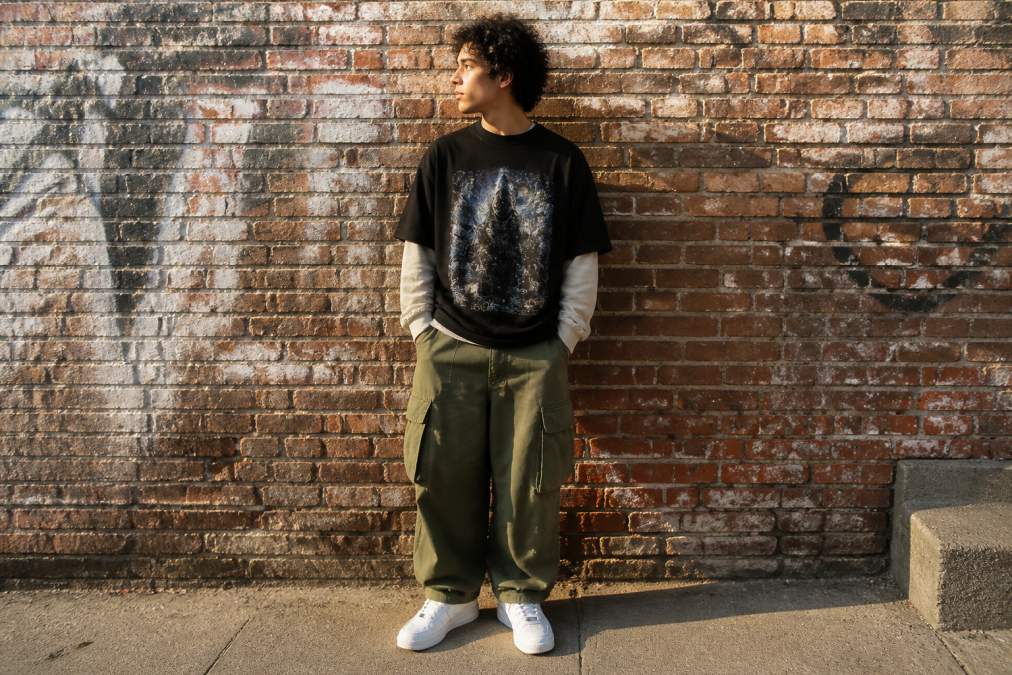
How to Layer Streetwear Without Looking Bulky
Layering streetwear works when each layer is thinner than the one under it, not thicker. The bulk problem almost always comes from stacking two heavy pieces.
The fix is a simple order:
- Start with a fitted base layer, like a plain tee or a long-sleeve shirt
- Add a mid layer, like a flannel or a light hoodie
- Finish with an outer layer, like a retro jacket or a workwear coat
Keep each layer short enough to show the one beneath it. If a layer hides the layer under it completely, it is doing nothing for the fit.
Texture matters here too. A cotton tee under a denim jacket under a wool coat gives the eye three different surfaces to read. Three cotton layers just look like a pile of fabric.
Master Proportions and Silhouette Balance
Silhouette balance is the difference between a fit that looks intentional and one that looks like you got dressed in the dark. The rule is simple: if the top is oversized, the bottom should be closer to your actual size, and the reverse.
Here is how the main combinations play out:
| Top | Bottom | Result |
|---|---|---|
| Oversized tee | Slim or straight jeans | Balanced, classic 90s-inspired look |
| Fitted tee | Baggy bottoms or jorts | Balanced, bottom-heavy street style |
| Oversized hoodie | Baggy bottoms | Very loose, needs clean sneakers to anchor |
| Cropped jacket | Wide-leg pants | Balanced, strong silhouette |
The third row is where most people go wrong. Two oversized pieces can work, but only with a clean, low-profile sneaker underneath. Chunky shoes on top of a loose fit reads as shapeless.
Pick Graphic Tees That Do the Work
A good graphic tee carries the whole outfit, so it has to be the right one. The best vintage streetwear tees share three traits: a print that reads from a few feet away, a wash that looks lived-in, and a fit that sits right.

What to look for:
- Print scale: a big, bold graphic beats a small, fussy one
- Wash: faded and soft beats crisp and new
- Fit: regular or slightly oversized, never skin-tight
- Condition: light wear is fine, holes and heavy cracking are not
A vintage Turkey Bowl '93 graphic tee is a good example of a piece that does the work on its own. The bold front print and heavyweight cotton give it presence, so you can keep everything else plain.
The FTC's guidance on textile and apparel labeling is worth knowing if you buy online, since it explains what sellers must disclose about fiber content and care.
Choose Footwear That Anchors the Fit
Footwear decides whether a loose fit looks styled or sloppy. Clean sneakers are the safest anchor for almost any vintage streetwear look.
Match the shoe to the volume of the outfit:
- Loose, baggy fit: low-profile sneakers, clean and simple
- Tighter, tailored fit: chunkier sneakers add weight back
- Workwear look: canvas or leather sneakers in a neutral color
Keep the sneakers clean. A scuffed shoe under a crisp fit is the fastest way to make the whole outfit look tired. One pair of clean white or black sneakers will carry more outfits than five loud pairs.
Mix Textures and Fabrics for Depth
Texture is what stops a vintage streetwear outfit from looking flat. Two pieces in the same fabric and finish blend into one shape. Two pieces in different fabrics create depth.
Easy texture pairings that work:
- Heavyweight cotton tee with washed denim
- Fleece hoodie with nylon or canvas outerwear
- Jersey tee with corduroy or twill bottoms
- Knit sweater with a rigid denim jacket
The vintage aesthetic leans on this naturally. Older garments have softer, broken-in surfaces that new pieces do not, which is a big part of why they photograph well.
Build a Color Palette That Works
A tight color palette is what makes a vintage streetwear outfit read as deliberate instead of accidental. The goal is not to wear fewer colors, it is to make the eye travel around the fit in a controlled way.
The 60-30-10 Rule, Applied to Streetwear
- 60% dominant color, usually your bottoms and outer layer. Denim blue, black, charcoal, or tan.
- 30% secondary color, your top or mid layer. A washed olive hoodie, a cream tee, a faded burgundy flannel.
- 10% accent, your statement piece, cap, socks, or sneakers. This is where the loud color lives.
If your statement piece is a rust-orange graphic tee, that tee is your 10%. Everything else should pull from the 60 and 30 buckets. The tee does not need to match anything, it needs to contrast against a quiet base.
Vintage Turkey Bowl '93 Shirt Mens XL →
Concrete Pairings That Work
These combinations show up again and again in street style photography because they are hard to get wrong:
| Dominant (60%) | Secondary (30%) | Accent (10%) |
|---|---|---|
| Washed black denim | Heather gray hoodie | White graphic tee |
| Light-wash denim | Cream or off-white tee | Forest green jacket |
| Tan cargo pants | Navy long-sleeve | Rust or burnt orange cap |
| Charcoal joggers | White tee | Red or blue graphic print |
| Olive workwear pants | Black tee | Yellow or cream sneakers |
Why Neutrals Do the Heavy Lifting
Neutrals, black, white, gray, tan, navy, denim blue, olive, are not boring. They are the frame. A vintage graphic tee with a busy print needs a quiet frame or the print gets lost in visual noise. This is the same reason gallery walls are painted white.

The vintage aesthetic leans on faded neutrals specifically. A crisp white tee reads modern. A slightly yellowed or washed-out white tee reads vintage. If you are building a vintage look, favor off-white, faded black, and washed denim over their crisp counterparts.
Color Blocking vs. Color Matching
Two approaches, two different results:
- Color blocking means wearing large areas of contrasting solid colors, a red top with green bottoms, for example. It is bold and reads as intentional, but it is easy to get wrong. Stick to two blocks maximum, and let one be a neutral.
- Color matching means repeating one color in small doses across the fit, a blue cap, blue socks, a blue graphic detail. This is the safer play and the one that makes an outfit look put together without shouting.
Seasonal Adjustments
The same palette shifts with the season. Summer fits lean on lighter dominant colors, cream, light denim, white, with a single saturated accent. Winter fits flip the ratio: dark dominant colors like charcoal, black, and deep olive, with the accent coming from a scarf, beanie, or sneaker. The accent color itself does not need to change. Only the base does.
Everyday Streetwear Essentials for Any Wardrobe
Everyday streetwear essentials are the pieces you reach for without thinking. Build these first, then add statement pieces on top.
A solid base wardrobe includes:
- Two or three plain tees in neutral colors
- One heavyweight graphic tee
- One contemporary hoodie
- One pair of straight or baggy denim
- One pair of cargo or utility pants
- One retro jacket or workwear coat
- One pair of clean sneakers
That list covers most days. From there, a capsule wardrobe approach keeps things simple: buy pieces that work with at least three other items you already own. If a new piece only works with one outfit, it is not a staple.
Streetwear Outfit Ideas for Kids
Streetwear outfit ideas for kids follow the same rules as adult fits, just scaled down and built for movement. Comfort comes first, style second.
Three easy formulas:
- Mini workwear: cargo pants, plain tee, canvas sneakers
- Retro casual: washed graphic tee, joggers, low-top sneakers
- Layered look: long-sleeve tee under a hoodie, straight jeans, clean sneakers
Skip anything stiff or scratchy. Kids will not wear it, no matter how good it looks. Stick to soft cotton, elastic waists, and shoes that are easy to put on.
Sizing is the other thing to get right. Vintage and pre-owned kids' pieces often run smaller than the tag suggests, so measure rather than guess.
Where to Shop: Vintage Streetwear Stores and Sourcing Tips
Sourcing is where most vintage streetwear guides stop at 'buy from a trusted seller.' What actually matters is knowing how to separate authentic vintage from modern reprints, how to judge condition from photos, and how to care for a piece once it arrives.
Authentic Vintage vs. Reprints: What to Look For
A huge share of what is sold as 'vintage' is actually a modern reprint or a licensed reproduction. Both can be fine to wear.
Here is how to tell them apart:
- The tag tells the story. Original vintage tags from the 80s and 90s use different fonts, different fiber blends, and often list a country of origin that no longer matches where the brand manufactures today. A single-stitch hem on a tee is a strong signal of pre-1990s production. Double-stitch hems became standard in the 90s and later.
- Print quality degrades differently. Original screen prints crack and fade in irregular patterns. Modern reprints use plastisol or DTG printing that either stays perfectly crisp or peels in sheets. A print that looks brand new on a 30-year-old tee is a red flag.
- Fabric weight and feel. Vintage heavyweight cotton has a distinct density and a slightly rough hand that softens with age. Modern blanks are often lighter and smoother.
- Copyright and licensing lines. Reprints frequently carry updated copyright dates or missing licensing text that originals had. If the date on the print does not match the era the design is from, it is a reprint.
None of this means reprints are bad. The point is to know which one you are buying so you pay the right amount and treat the piece accordingly.
Judging Condition From Photos
Online vintage buying depends on photo quality. Look for:
- Multiple angles, including the back, the inside tag, and any flaws
- Close-ups of the collar, cuffs, and hem, these are where wear shows first
- Measurements, not just tag size. Vintage sizing runs small and inconsistent. Pit-to-pit and length in inches are the only reliable numbers.
- A stated condition grade. Terms like 'excellent,' 'good,' and 'fair' mean nothing without a scale. A seller who defines their scale is a seller who inspects their inventory.
Caring for Vintage and Delicate Pieces
- Wash cold, inside out, on a gentle cycle. Heat is the enemy of vintage cotton, prints, and elastic. Cold water preserves color and fiber.
- Skip the dryer. Air dry flat or on a line. Dryers shrink vintage cotton and crack screen prints faster than anything else.
- Turn prints inside out before washing. This protects the graphic from abrasion against other garments.
- Hand wash anything with visible cracking or delicate stitching.
- Store folded, not hung, for knits and heavy tees. Hanging stretches shoulders over time. Fold and stack.
- Address small holes early. A single stitch with matching thread prevents a small hole from becoming a tear.
For sneakers, the rules are different. Clean uppers with a soft brush and mild soap, never soak them, and store them away from direct sunlight.
What to Look for in a Seller
Beyond the piece itself, judge the seller on process:
- Photos: multiple angles, including flaws
- Grading: a defined condition scale, not vague words
- Measurements: pit-to-pit and length listed, not just the tag size
- Authentication: a stated process, not just a claim
- Returns: a policy you can actually read
AuthentiKickz cleans, inspects, and authenticates every piece in-house before it ships. That covers sneakers, denim, graphic tees, and everyday streetwear, with sizes from toddler through 5XL. If you want to build a full fit from one place instead of five, that saves a lot of guesswork.
For background on how secondhand fashion fits into the wider market, the EPA's data on textile waste explains why buying pre-owned matters.
Frequently Asked Questions
What is the 3-3-3 rule for building outfits?
The 3-3-3 rule suggests limiting your outfit to three colors, three textures, and three distinct pieces. For vintage streetwear, this means choosing a washed-out graphic tee, a retro jacket, and baggy bottoms in a cohesive color palette. Sticking to three textures, like cotton, denim, and leather, adds depth without overwhelming the look. This framework helps you create balanced, intentional outfits that feel styled rather than random.
How do you mix vintage pieces with modern streetwear?
Mix vintage and modern by anchoring a thrifted or pre-owned statement piece with contemporary basics. For example, pair a 90s-inspired graphic tee with a new oversized hoodie and clean sneakers. Keep proportions consistent: if the vintage piece is oversized, balance it with a fitted bottom or vice versa. This approach lets you build a vintage aesthetic without looking like you stepped out of a time capsule, and it works for both everyday wear and streetwear culture looks.
How can I tell if a vintage streetwear piece is authentic?
Check the tag, stitching, and graphic quality. Authentic vintage pieces often have single-stitch hems, older brand logos, and copyright dates on the graphic. Reputable vintage streetwear stores like AuthentiKickz authenticate every item in-house, so you can trust the grading and description. Look for clear photos of tags and measurements, and avoid listings that use stock images or vague condition notes. When in doubt, ask the seller for additional detail shots before buying.
What are the best ways to care for vintage streetwear clothing?
Wash vintage pieces inside out in cold water on a gentle cycle, then air dry to prevent shrinkage and fading. For delicate graphics, hand wash or use a mesh laundry bag. Store folded rather than hung to keep shoulders from stretching. If a piece has minor stains, treat them promptly with a mild detergent. Proper care extends the life of your vintage streetwear and keeps the wash and wear look intact for years.